
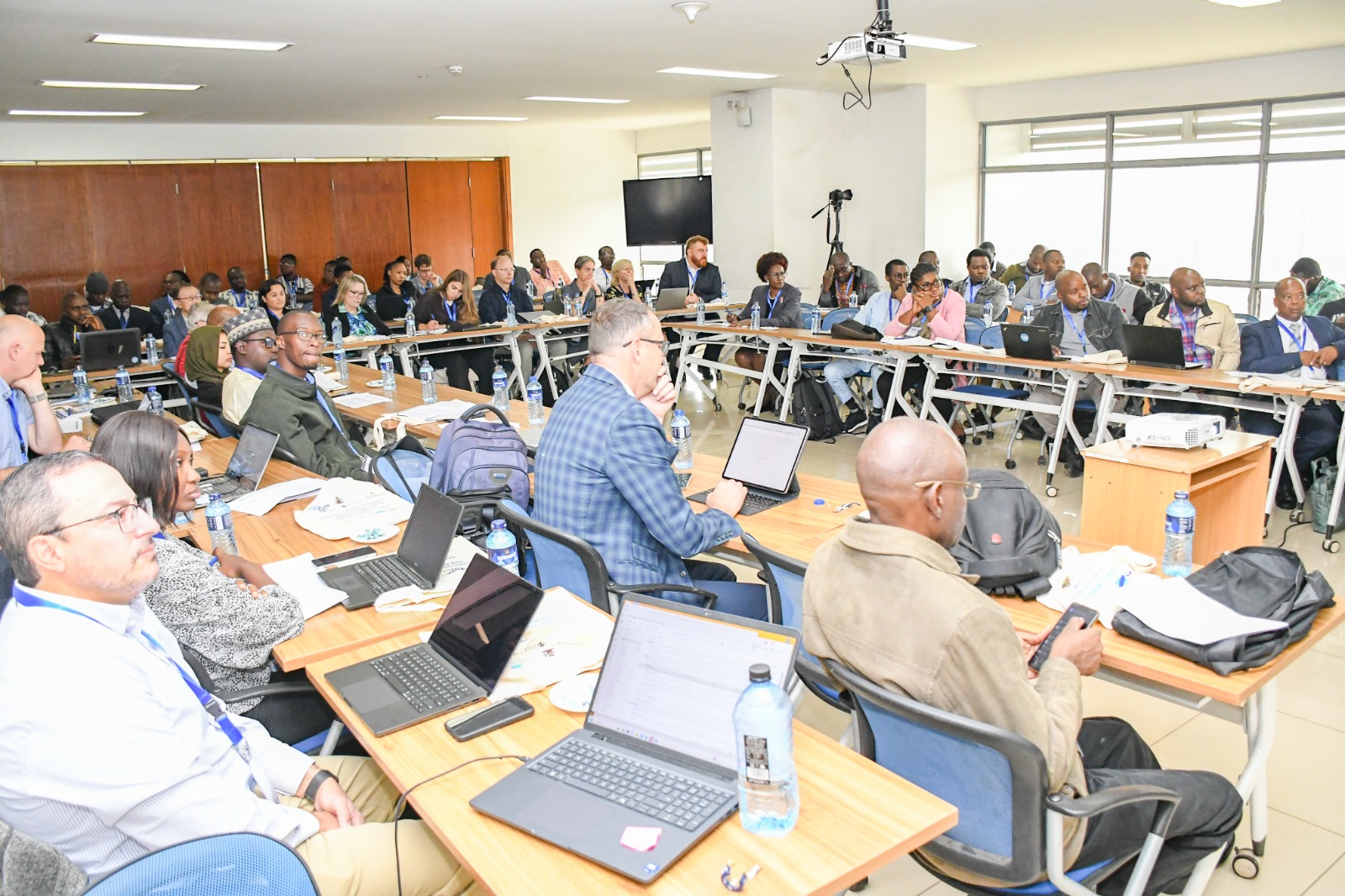
The Department of Earth Climate Sciences today officially commenced the International Workshop on Future Research and Applications of Clouds, Precipitation and Extreme Weather in Africa, a five-day forum running from 20 to 24 July 2026, bringing together scientists, researchers and climate experts from more than 25 countries to advance research on weather systems, climate resilience and atmospheric science across Africa.
The workshop seeks to deepen scientific understanding of clouds, precipitation and extreme weather while fostering collaboration among researchers, policymakers and practitioners working to improve weather prediction, disaster preparedness and climate resilience.
Speaking during the opening ceremony, the University of Nairobi's Deputy Vice-Chancellor (Human Resource and Administration), Prof. Leonida Kerubo, observed that Africa continues to experience increasingly frequent and severe weather extremes, including floods, droughts, heatwaves and destructive windstorms, underscoring the urgent need for stronger scientific research and collaboration.
She noted that Kenya's recent floods resulted in loss of lives, destruction of property, displacement of communities and disruption of livelihoods, while prolonged droughts continue to threaten food security, tourism and economic development across the continent. She emphasized that generating scientific knowledge on these extreme weather events is essential for improving forecasting, informing policy and building resilient communities.
Prof. Kerubo also highlighted the University of Nairobi's longstanding contribution to meteorology and climate science in Africa. Through the World Meteorological Organization Regional Training Centre, the University has trained meteorologists from numerous African countries, while its Institute for Climate Change and Adaptation continues to serve as a centre of excellence in climate research, education and capacity building.
She reaffirmed the University's commitment to advancing quality education, research and innovation that responds to regional and global challenges, noting that partnerships and knowledge exchange remain critical in addressing the growing impacts of climate change.
Throughout the five-day workshop, participants will engage in scientific presentations, technical discussions and collaborative sessions on cloud processes, precipitation, weather observations, modelling, forecasting, extreme weather events and climate applications. The forum also provides an opportunity to strengthen international partnerships and promote innovative research that contributes to sustainable development and climate resilience across Africa.
The workshop has been organized through a collaboration of international scientific organizations and research institutions committed to advancing atmospheric science. By hosting the event, the University of Nairobi continues to strengthen its position as a leading centre for climate science research and capacity building in Africa.
- Log in to post comments